A short while ago, I went to look at the collection of a friend of mine. He was born in Great Britain and came to Canada when he was 10 or so. His father served in the Royal Navy and the book collection was very strong in this area. My friend mentioned he once lived on the Eastern Shore of Nova Scotia and once a year there was a community garage sale all along the highway. This accounted for some library items that stood out from their military brethren.
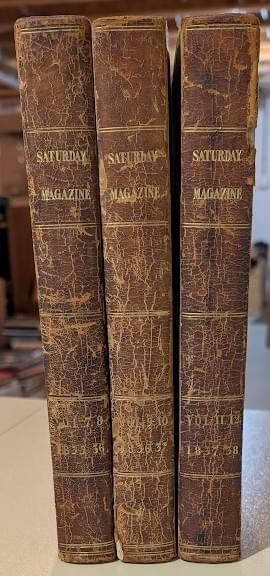
When I saw the three large, leather spines sticking up, I had to pick those out for a look. A quick look, told my friend what I would pay for them, and put them in my book pile. And when I got home, I spent hours looking through these three books.
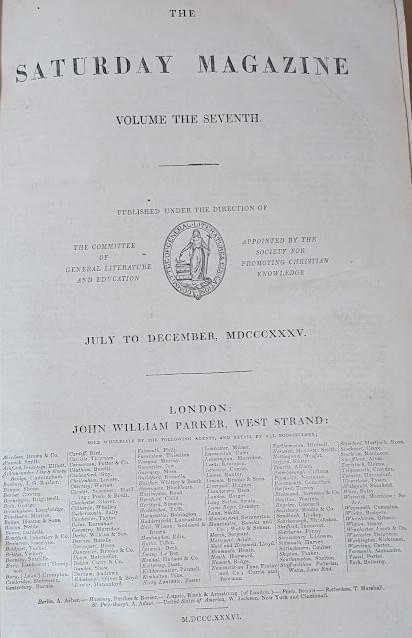
The Saturday Magazine; Published under the direction of The Committee of General Literature and Education; Appointed by the Society for Promoting Christian Knowledge; six volumes each covering six months, starting July 1835 through June 1838; in three books; published by John William Parker, London. Included are weekly Parts 193 to 385. 1,544 very well illustrated pages.
The Saturday Magazine was a British magazine published from 7 July 1832 to 28 December 1844 – 801 weekly issues. The Saturday Magazine was established as an Anglican rival to the Penny Magazineas a way for the working man to educate himself.
The Saturday Magazine was primarily intended for working-class adults and families, encompassing laborers, apprentices, and domestic servants who lacked the means to purchase more expensive books or access formal education. Published at a penny per issue, it sought to reach those in industrial Britain's urban poor, including factory workers and rural operatives earning modest wages of around 12 to 14 shillings weekly, providing an affordable entry point to instructive reading material.
To accommodate semi-literate or illiterate readers, the magazine employed simple language, short articles on accessible topics like natural history and practical knowledge, and wood-engraved illustrations that facilitated family reading sessions, where content could be shared aloud within households. Its format emphasized brevity and engagement, assuming no prior expertise and appealing to self-learners in settings such as Mechanics' Institutes or Sunday schools.
The publication addressed both genders without explicit division, offering neutral, family-oriented material suitable for men, women, and youth; for instance, nature stories highlighted everyday observations like fishing or markets to draw in younger readers, while domestic moral themes resonated with women managing households. Aimed at all ages, it supported intergenerational reading, from children in educational contexts to adults pursuing moral and intellectual improvement.
Circulation efforts targeted the urban poor through promotion via the Society for Promoting Christian Knowledge's auxiliary societies and networks, including churches and Sunday schools, to distribute copies widely among Protestant communities in industrial areas like Manchester and Lancashire.
A typical edition of the Saturday Magazine began with an account of some exotic place. At this time the expansion of the British empire was speeding up and people at home in England were very interested in finding out what was happening around the world. Other articles would be about nature, science, history, famous buildings, technology, etc.
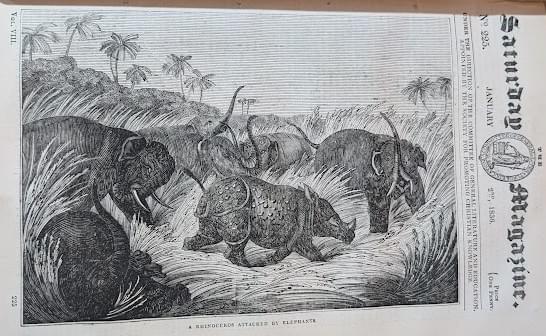
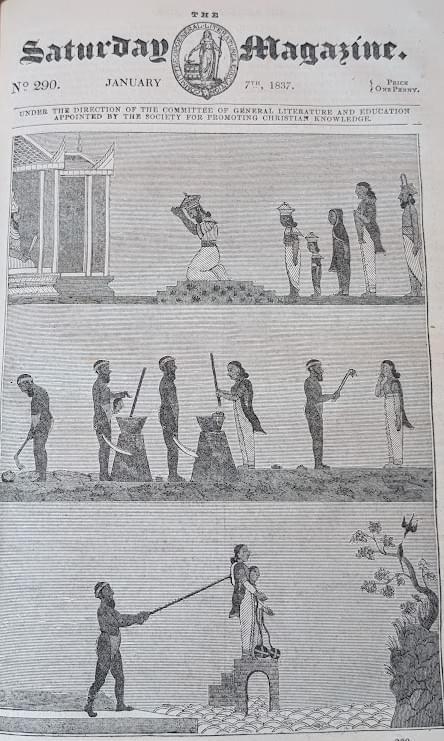
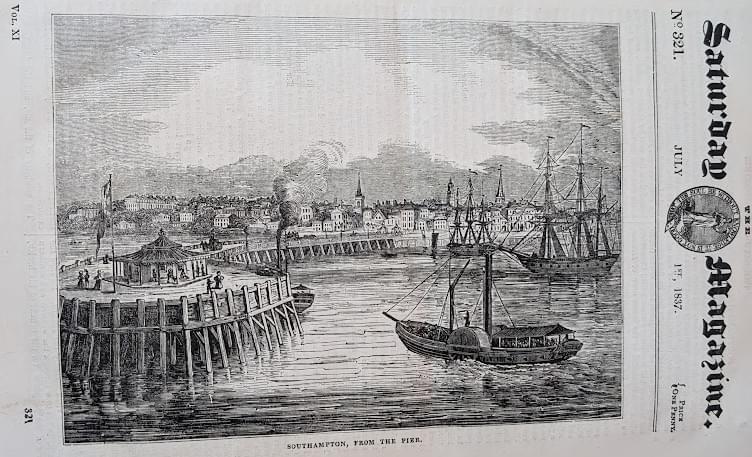
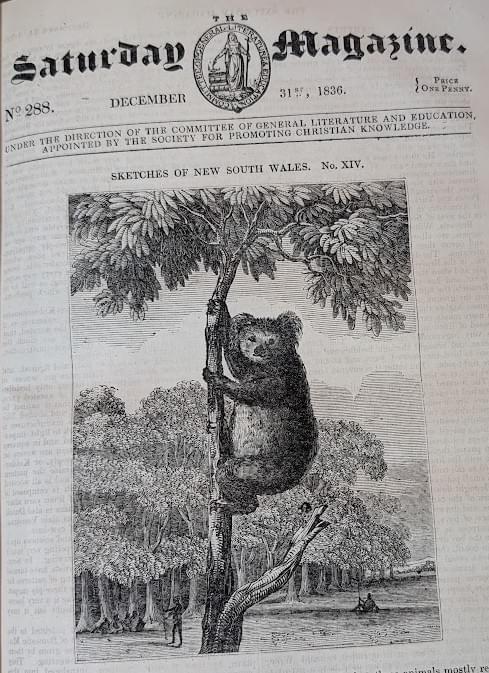
The magazine contains series of articles of various numbers, issued in somewhat of a haphazard fashion. One of the longest series covered in these six volumes is entitled “Sketches of New South Wales” with Part I in the May 7, 1836 issue, in volume 8, concluding with Part XX in the September 2, 1837 issue, in volume 11.
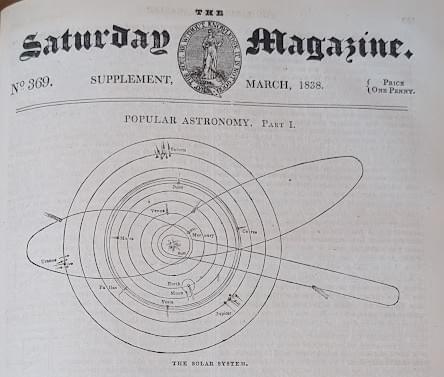
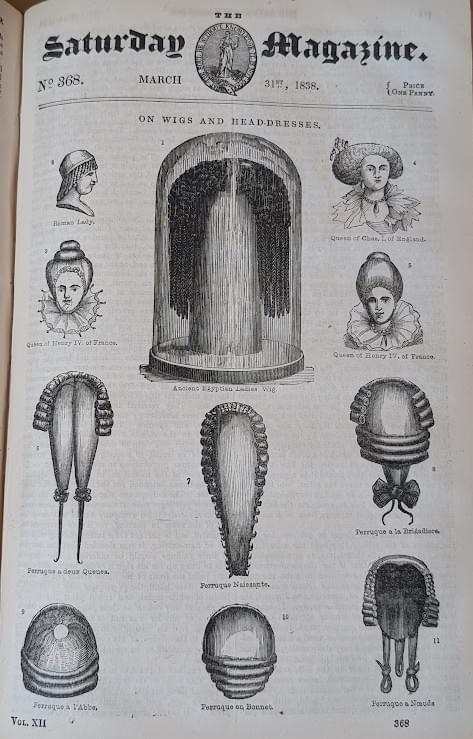
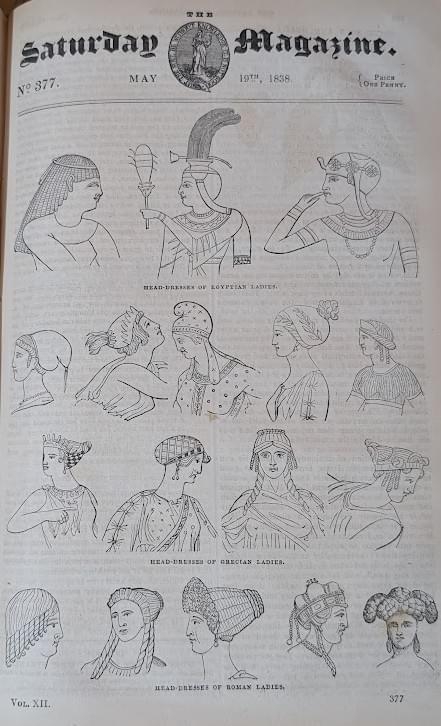
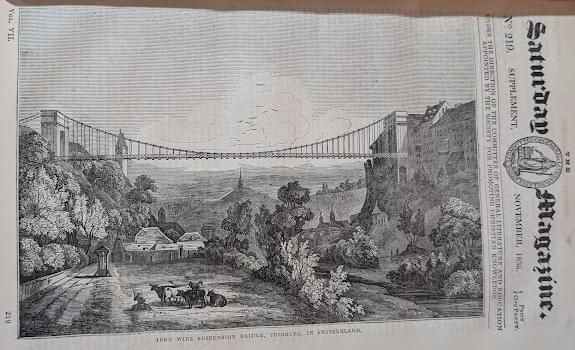
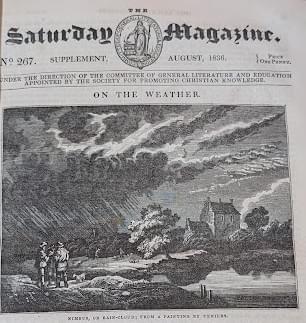
Other articles of note: Glastonbury, Egypt, Bridges, Weather, Anglo Saxons, the ancient English Morris Dance, Navigation, Arsenic, Astronomy, Wigs and Hair-dresses and Missionary Travels in the Interior of Newfoundland. The quality of the books is very high, richly illustrated and very well thought out. Impressive really, in my opinion.
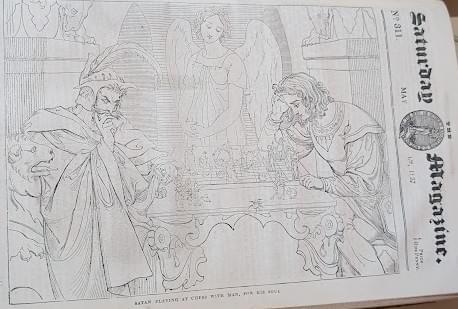
I will end with an illustration that was very different than almost all the other ones, both in style and subject, although the subject fit right in with their social mandate. This delicate line drawing of Satan playing chess with a man for his soul, unfortunately is very faint.