Books are physical objects. For this musing we are going to ignore the value of the text – the printed word. There are two common differentiators – Hardcover and Softcover and the quality of both can vary significantly.
Now, let’s look at engineered differences, starting off with some commonplace items: there are pop-up books that have custom card cut-outs pasted onto pages – engineered for each pop-up; there are fold-out maps and illustrations; some books have pockets pasted onto the back cover with folded maps inside; some books comes in boxes or sleeves; some volumes have differentiating substrates of paper and some have sewn-in bookmarks.
Bindings can be an engineering marvel as well. Both leather and cloth bound boos can be blind embossed or embossed with gilt or colours. They could have illustrations set into the cover. Some private press books can have covers inlaid with various leathers or coloured leather. Medieval manuscripts are almost all bound in leather of varying grades, some have metal clasps to keep the book from springing open – usually found where the leaves are made from vellum or parchment. Royalty and the very rich sometimes had jeweled bindings that in themselves were very valuable and often raiders, such as the Vikings, ripped the pages from the book and kept the bindings, thank you very much.
Occasionally, very occasionally, you come across cleverly engineered books that are surprises. I have two examples and these are the focus of the musing. When I picked up these items, books doesn’t quite cover it, I was baffled at first, had to figure out how to open things up, and ultimately both surprised and delighted. One of the items happily priced and put into the book business and the other can be found in our library. I won’t tell you which went where!
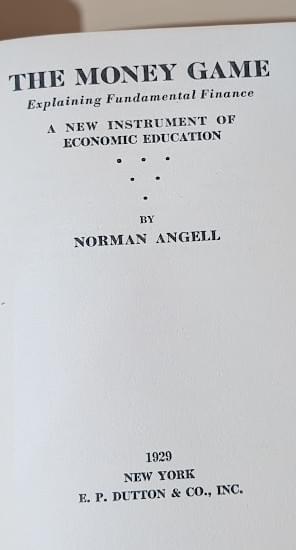
The Money Game: Explaining Fundamental Finance – A New Instrument of Economic Education; by Norman Angell; E. P. Dutton & Co., Inc., New York, 1929. First published in 1912.
Picking this item up it just looked like a book.
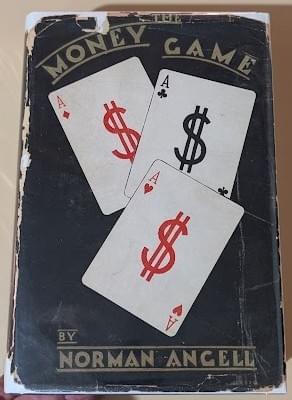
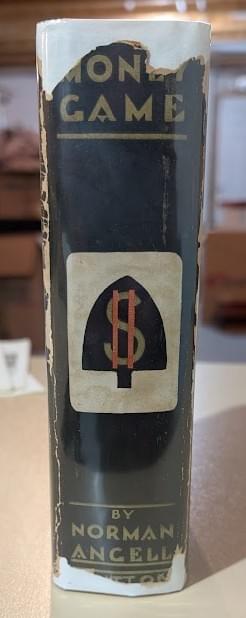
But when I opened the book, I was surprised to find that the back flap of the dust jacket was embedded in the middle of the book. And then I looked at the bottom of the book and saw that the book was half pages and half a box.
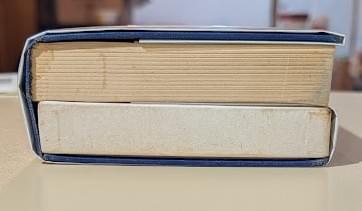
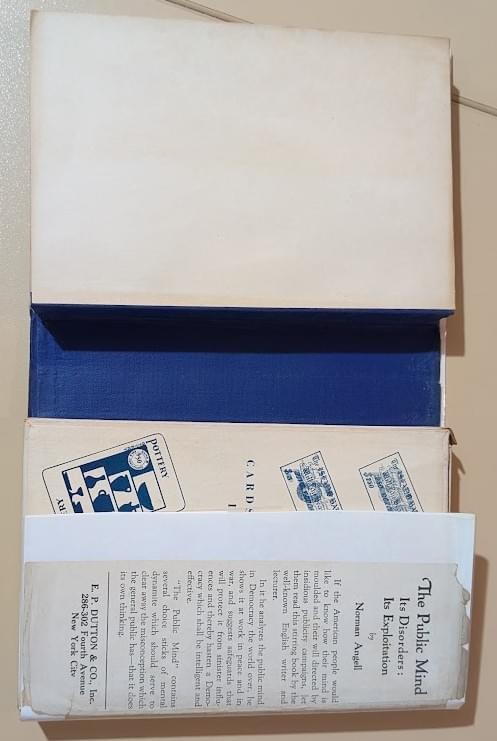
Then I took the back flap away from the second half and the mystery was over.
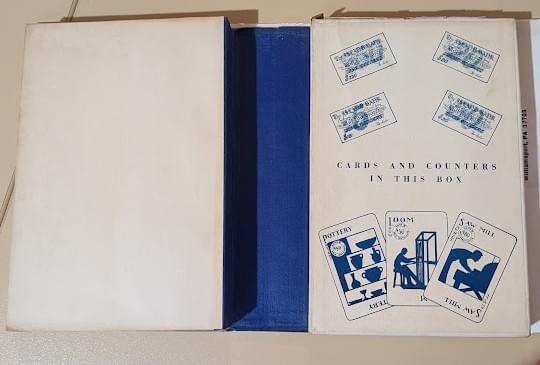
Cards and Counters in this box.

And here we have a deck of cards, 4 denominations of money, and a stack of scorecards, marked “Purchases by Bank”. Sounds like a precursor to Monopoly! Note the purchases were not of properties but of businesses in different sectors. And the sectors were valid in 1912, rather less so today: Brickfield, Coal Mine, Iron Foundry, etc.
A very interesting and clever period piece.
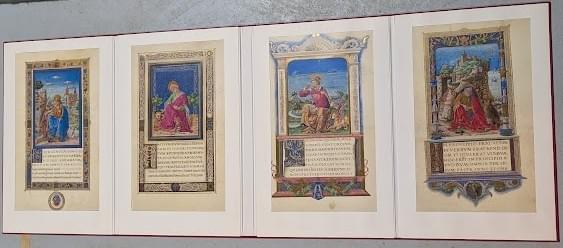
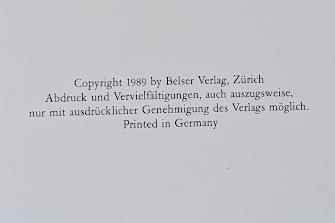
Das Evangeliar Urbinas Latinus 10; Die Vier Evangelisten Ferrara/Urbino, um 1474; Belser Faksimile Editionen; Aus Der Biblioteca Apostolica Vaticana. Copyright 1989 by Belser Verlag, Zurich. (A facsimile reprint of illustrations from a manuscript found in the Vatican Library – text in German)
As with the book noted above, I picked up this book that came inside a nice box, not knowing that I was soon to be baffled – again!
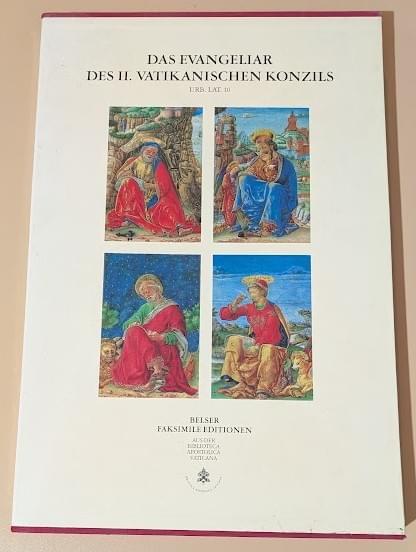

I opened it up and found a large white board with a cut out in the middle, that housed a small book, which I opened but couldn’t read.
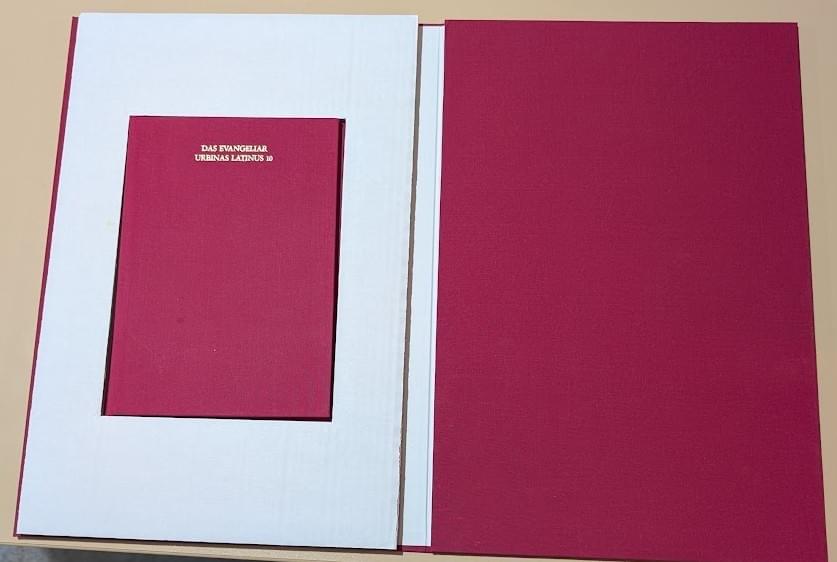

Then I realized that when I removed the book and the white board that the two red boards should be opened up.
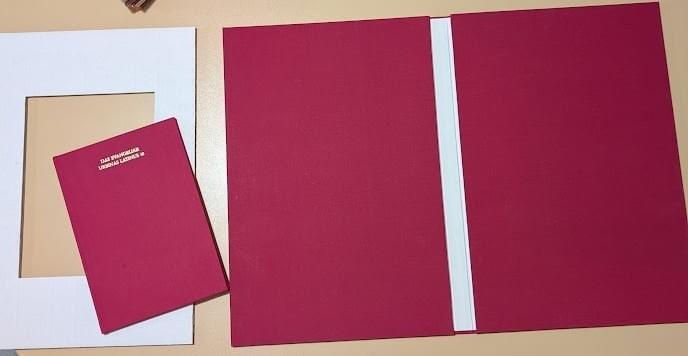
And then I opened up the portfolio that measured almost 4 feet across. Inside was the whole purpose of this engineered marvel. The most beautiful reproductions of art that I have ever encountered in the thousand plus art books that I have had the pleasure of viewing. These reproductions had their own gilt! Here are the illustrations that were the highlights of the 1474 manuscript – the Four Evangelists –